If you have ever stood in a candlelit church or a snowy town square and heard a clarinet sing the opening notes of “O Come, All Ye Faithful,” you know how that simple melody can make the air feel brighter. On a Bb clarinet, this carol is not just a Christmas tune. It is a chance to let the instrument breathe warmth, color, and memory into every phrase.
Receive a free PDF of the chart with clarinet fingering diagrams for every note!
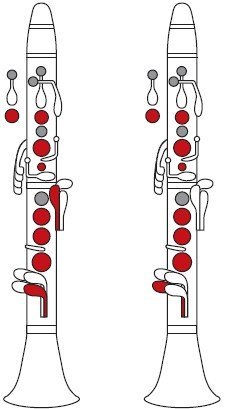
The O Come, All Ye Faithful clarinet fingering chart is a note-by-note guide for Bb clarinet that shows which keys to press for every pitch in the carol. It helps players of all levels learn the melody faster, play in tune, and focus on musical expression and beautiful tone.
The quiet magic of “O Come, All Ye Faithful” on clarinet
There is something about this carol on a Bb clarinet that feels almost like a whispered invitation. The low Gs and As sit right where the clarinet speaks most easily, and as the melody rises toward high D, the sound shifts from warm to radiant. It is the perfect piece to feel the clarinet's full emotional range without gymnastics or showy technique.
Clarinetists in orchestras from the Berlin Philharmonic to the London Symphony Orchestra have played “O Come, All Ye Faithful” in Christmas concerts and holiday broadcasts, often as part of medleys arranged by conductors like John Rutter or Leroy Anderson. Listen closely in those arrangements: the clarinet usually gets the phrases that need warmth, breath, and a little human vulnerability.
Field Note: In the Martin Freres archives, there is a handwritten holiday program from the early 1900s where a parish clarinetist, playing a Martin Freres wooden clarinet, was listed simply as “soloist for Adeste Fideles.” No other details, just that. It tells you how central this melody already was to community life over 100 years ago.
From “Adeste Fideles” to clarinet choirs: a melody with a long journey
Before it was “O Come, All Ye Faithful” on clarinet, the tune was known as “Adeste Fideles.” Its authorship is still debated. Many credit John Francis Wade, an 18th century copyist and musician, whose manuscripts from around 1740 include the Latin text and melody. Others connect it to earlier Catholic traditions in England and France.
By the classical era of Mozart and Haydn, “Adeste Fideles” was already circulating through churches and courts. Clarinet pioneer Anton Stadler, who inspired Mozart's Clarinet Concerto in A major, would almost certainly have known the hymn. While we do not have a surviving clarinet arrangement from Stadler himself, he often played in church settings in Vienna, where simple hymn tunes were used to warm up the congregation before mass. This carol fits that role perfectly.
In the romantic period, Heinrich Baermann and Carl Baermann, both legendary clarinet virtuosos, played numerous arrangements of chorales and hymns in salon concerts. Collections from that era include soft, devotional pieces framed around melodies like “Adeste Fideles.” The clarinet's singing tone and flexible dynamics made it a natural voice for sacred melodies in smaller chapels and living rooms with harmoniums and upright pianos.
By the 20th century, clarinetists in military bands and wind ensembles were carrying the tune all over the world. Christmas concerts with massed clarinet sections became common, especially in British brass and wind bands. In many of those settings, the principal clarinet would introduce “O Come, All Ye Faithful” alone, almost like a cantor, before the full band joined in.
4 easy accidentals in the full arrangement
Most Bb clarinet versions of “O Come, All Ye Faithful” stay within a comfortable 1 octave range and use no more than 4 accidentals, which keeps the focus on breath, phrasing, and intonation instead of finger gymnastics.
How great clarinetists have touched this carol
Even if they never released a commercial recording of “O Come, All Ye Faithful” by name, many famous clarinetists have shaped how we think about this kind of lyrical, spiritual melody.
In the classical tradition, Sabine Meyer often speaks about the clarinet as a “human voice with keys.” When you listen to her recording of Brahms's Clarinet Sonata in E flat major, the long lines and warm chalumeau register give you a model for playing this carol. That same rich color on a low B or C in “O Come, All Ye Faithful” immediately gives the melody depth.
Martin Frost, with his striking work on sacred-inspired pieces like “Klezmer Dances” and Arvo Part arrangements, shows how a clarinet can move from a quiet prayer to a bright shout within a few measures. If you imagine his phrasing on the climactic line “O come, let us adore Him,” your sound concept changes. It becomes less like “play all the notes” and more like “speak a line with intention.”
Richard Stoltzman, known for blending classical and jazz, recorded Christmas albums where his clarinet floats over strings and piano. His tone on carols is almost vocal, with tiny slides and gentle vibrato. Those exact effects work beautifully in the second phrase of “O Come, All Ye Faithful,” when the melody leans into the dominant and begs for a touch of warmth.
On the jazz side, Benny Goodman and Artie Shaw both loved to take simple hymn-like themes and dress them in swing phrasing. While they are better known for pieces like “Sing, Sing, Sing” and “Begin the Beguine,” their approach to legato lines in tunes such as “Body and Soul” or “Where or When” gives you a blueprint. Take that same loose, singing phrasing and lay it over “O Come, All Ye Faithful” with a subtle walking pulse underneath, and suddenly the carol feels like a jazz ballad.
Klezmer masters Giora Feidman and David Krakauer often include nigunim and Hasidic melodies that share the same devotional character as this carol. Feidman's soft, breathy entrance on a low E or F in his liturgical performances can transform how you think about your first note in this hymn. Krakauer's bending of pitches and expressive use of the clarinet throat tones can make the line “joyful and triumphant” feel like a cry from the heart.
Where “O Come, All Ye Faithful” hides in albums, concerts, and film scores
Most clarinet recordings of “O Come, All Ye Faithful” appear tucked into Christmas compilations, church broadcasts, or live concerts, yet they leave a deep impression on listeners and players.
Clarinet choirs, from university ensembles to community groups, often open their holiday concerts with this carol. Recordings by clarinet choirs such as the Royal Northern College of Music Clarinet Ensemble and various American university groups use Bb clarinets, Eb clarinets, and bass clarinets to stack the melody in glowing harmonies. The main tune, often carried by a single Bb clarinet, sits right where your fingering chart will place you: comfortable, resonant, flexible.
In orchestral Christmas programs, you can hear “O Come, All Ye Faithful” arranged by John Rutter, David Willcocks, and Mack Wilberg. In many of these arrangements, the first clarinet doubles the soprano line or weaves a countermelody above the choir. You can treat your solo clarinet version in the same way: imagine a choir underneath you and shape each phrase so it still makes sense even if you are the only voice in the room.
Film and television have also played with this melody. Holiday specials with symphonic underscores often bring in a solo clarinet on a quiet shot of snow or candles. While the credit might simply say “traditional carol,” clarinetists in orchestras like the Boston Pops or New York Philharmonic are behind those glowing lines.
Setting
Clarinet Role
Artistic Focus
Church service with organ
Solo or doubling soprano line
Warm tone, steady pitch, expressive vibrato
Wind band Christmas concert
Lead melody or countermelody
Strong articulation, clear projection over brass
Clarinet choir recording
One of many harmony voices
Blend, intonation, matching chalumeau colors
How this carol feels under your fingers and in your chest
On Bb clarinet, “O Come, All Ye Faithful” lives right where breath, heart, and hand can relax. The opening notes often begin on a low G or A, and the phrase climbs gently. That rise feels like taking a deep breath and lifting your eyes. There are no harsh leaps, no sudden squeaks if your embouchure and air are steady. It invites you to sing, not to wrestle with the instrument.
The text of the carol speaks about joy, triumph, and adoration, but there is also tenderness in it. If you listen to choral recordings by the King's College Choir or the Vienna Boys Choir, the first verse is almost always soft, with the real power reserved for later verses. You can shape your clarinet version the same way. Begin as if you are talking to one person in a quiet room, and then gradually grow toward the line that feels like a personal declaration of faith, hope, or simple gratitude.
Technically, the range often sits from low G up to high D or E on the staff. Artistically, this short span gives you room to experiment with color: darker chalumeau for the opening, slightly brighter clarion register as the melody rises, and a gentle decrescendo as you return home. Mouthpiecereed combinations, like a Vandoren 3 reed on a medium lay mouthpiece, can help you blend softness with response for this style of playing.
From baroque chapels to jazz clubs: then and now
In baroque chapels, the melody that became “O Come, All Ye Faithful” would likely have been sung by a small choir or a cantor with organ. Early clarinet relatives, such as chalumeaux, were just beginning to appear. These instruments, with only a handful of keys, lived almost entirely in the low register that modern clarinets still call the chalumeau. Playing the carol today on a Bb clarinet is a quiet nod to those origins.
By the classical period, as Anton Stadler and his contemporaries expanded the clarinet's keywork and range, melodies like this one became ideal practice material for blending legato over the break. Teachers would assign hymn tunes to help students move from throat tones up to clarion notes, often on boxwood or early grenadilla clarinets.
In the romantic era, the clarinet's voice in Brahms's Clarinet Quintet in B minor or Weber's Concertino in E flat shows how lyrical the instrument could be. Those same players would sit in church the next morning and play simple carols. They did not separate concert music from devotional melodies. “O Come, All Ye Faithful” lived in both spaces, as a way to show love for phrasing, not just technique.
The jazz age brought the clarinet into dance halls and radio shows. While Benny Goodman or Buddy DeFranco might not have recorded this carol directly, they often played Christmas broadcasts where a hymn or carol would appear in a medley. Their light staccato and legato phrasing on ballads carry straight over to this tune.
Today, modern clarinetists like Sharon Kam, Andreas Ottensamer, and Kari Kriikku perform holiday programs that mix concertos by Mozart and Copland with carol arrangements. Youth clarinetists share their versions on social media, a single microphone capturing a student in a bedroom playing the same melody that once echoed in stone chapels. The song has walked quietly with the clarinet through centuries.
Why learning “O Come, All Ye Faithful” matters for your playing
Spending real time with this carol can quietly transform your musicianship. Because the fingering chart keeps the melody in an easy Bb clarinet range, your mind is free to listen to pitch, color, and the shape of every note. It becomes a daily etude in phrasing disguised as a familiar song.
For beginners, it is often the first piece where the sound finally feels like music instead of just notes. For advancing players, it can reveal how well their tone, air support, and finger coordination really work when they strip away fast passages and focus on a long, exposed line.
For professionals, using this carol as a warm up on a Martin Freres style wooden clarinet or a modern instrument can reset the ear. It is a way to reconnect with why they started playing: the desire to make one simple melody sing. It is also one of those tunes you will be asked to play again and again, in churches, at school concerts, in nursing homes, and at family gatherings.
Player Level
Benefit of this Carol
Focus Area
Beginner
First “real” song that sounds recognizable
Basic fingerings, steady air
Intermediate
Develop lyrical phrasing and dynamic control
Tone color, smooth crossing over the break
Advanced/Pro
Refined intonation and expressive storytelling
Micro-phrasing, vibrato, subtle rubato
A gentle fingering overview for Bb clarinet
The free Bb clarinet fingering chart for “O Come, All Ye Faithful” keeps everything clear: left-hand basic positions for low G, A, and B, right-hand support for C, D, and E, and just a few notes that cross the register key into clarion. Most phrases can be played without fast alternations, which lets your fingers relax and your sound open up.
Use the chart as a visual map. Start by playing the melody one phrase at a time: first the opening line, then the answering line, then the climb on “joyful and triumphant.” Think of each group of notes as a single sentence. Once your fingers know the path, your ear and heart can take over.
Sing or hum the full melody once so you know the contour.
Play the first phrase using the chart, focusing on soft, centered tone.
Add the second phrase, keeping your air steady through the slurs.
Practice the highest notes separately using long tones for stability.
Finally, play the whole carol as if you are leading a room in song.
Simple practice routine for this carol
Here is a compact routine you can use with the fingering chart a few days in a row. It works whether you are playing a student plastic clarinet or an older Martin Freres wooden clarinet from your school cabinet.
Step
Time
Focus
Long tones on G, A, B, C
3 minutes
Stable embouchure, supported air
First two phrases slowly
4 minutes
Even finger motion, soft dynamics
Highest phrase on “joyful and triumphant”
3 minutes
Crossing the break smoothly
Play the full carol twice
5 minutes
Phrasing, dynamics, expression
Quick troubleshooting guide for common issues
If something feels off while you use the “O Come, All Ye Faithful” clarinet fingering chart, it is usually one of a few simple things. This quick table can help you sort it out without losing the joy of playing.
Problem
Likely Cause
Quick Fix
Notes crack on high phrase
Loose embouchure or uneven air
Tighten corners slightly, blow a steady warm stream
Low notes sound airy
Leaks from fingers or relaxed left thumb
Seal tone holes firmly, adjust left thumb position
Melody feels choppy
Too many tongued notes, no phrase plan
Slur more notes, breathe only at the ends of phrases
Key Takeaways
Use the fingering chart to free your mind from note worries so you can focus on tone, phrasing, and emotion.
Listen to great clarinetists in lyrical pieces and borrow their sound concept for “O Come, All Ye Faithful.”
Treat this carol as a daily musical meditation that strengthens your breath, fingers, and expressive voice.
Frequently Asked Questions
What is the O Come, All Ye Faithful clarinet fingering chart?
The O Come, All Ye Faithful clarinet fingering chart is a visual guide that shows which keys to press on a Bb clarinet for every note in the carol. It helps players of all ages learn the melody accurately, stay in tune, and concentrate on phrasing and expression instead of guessing fingerings.
Is O Come, All Ye Faithful easy for beginner clarinetists?
Yes, it is a friendly piece for beginners. The melody usually stays within about one octave, mostly on comfortable notes like G, A, B, C, and D. With a clear fingering chart and slow practice, new players can recognize the tune quickly and feel proud of playing a real song.
What key is O Come, All Ye Faithful usually played in on Bb clarinet?
Many Bb clarinet arrangements place “O Come, All Ye Faithful” in concert Bb or concert F, which means the clarinet reads in C or G. This keeps fingerings simple and places the melody in a warm, singing register that is comfortable for school bands, church ensembles, and solo performances.
How should I phrase O Come, All Ye Faithful on clarinet?
Think in vocal phrases, as if a choir is singing the text. Breathe at natural line endings, keep your air moving through slurs, and save your loudest dynamic for the emotional high point. Listening to singers and lyrical clarinet recordings will help you shape each phrase with direction.
Can I use vibrato on O Come, All Ye Faithful for clarinet?
Yes, light vibrato can suit this carol very well, especially in solo or chamber settings. Use gentle, controlled jaw or diaphragm vibrato on longer notes, such as the sustained tones on “faithful” or “adore Him.” Keep it subtle so the vibrato enhances the line instead of distracting from the melody.
For more musical stories, clarinet history, and fingering ideas, you can also visit other articles on MartinFreres.net about Bb clarinet technique, vintage Martin Freres clarinets in school bands, and lyrical clarinet practice pieces that keep your sound growing all year long.