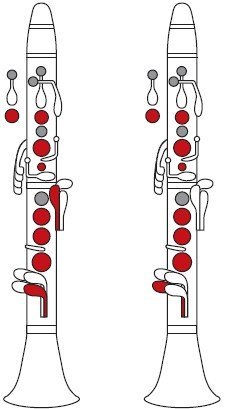
There is a special kind of quiet that settles over a room when a clarinet begins Silent Night. The reed vibrates softly, the chalumeau register glows like candlelight, and suddenly you are connected to generations of players who have used this simple carol to say what words could not. This free Silent Night clarinet fingering chart is not just about the right keys to press. It is an invitation into that shared silence.
Receive a free PDF of the chart with clarinet fingering diagrams for every note!
Quick Answer: What is a Silent Night clarinet fingering chart?
A Silent Night clarinet fingering chart is a visual guide showing every note and fingering needed to play Silent Night on Bb clarinet in a clear layout. It helps clarinetists learn the melody faster, avoid wrong notes, and focus on playing with calm tone and real expression.
From Midnight Mass To Clarinet Bell: How Silent Night Began
Long before clarinet students were playing Silent Night at school concerts, the melody was sung quietly in a small Austrian church. In 1818, composer Franz Xaver Gruber and priest Joseph Mohr introduced “Stille Nacht” in Oberndorf, near Salzburg. There was no microphone, no recording gear, just voices and guitar filling a stone church with warmth.
Clarinetists came a bit later, but they were ready for it. Imagine the mellow low F, the gentle shift to open G, the chalumeau sound matching a dark winter sky. The clarinet was still growing as an instrument in the 19th century, with makers like Iwan Muller and later the Oehler and Boehm systems shaping the keys that your fingers now rest on. When you play Silent Night today, your Bb clarinet carries the song much farther than that tiny church, yet it still feels intimate.
Field Note: In the Martin Freres archives there is a handwritten program from a French village Christmas concert in the 1930s listing “Douce Nuit” for “clarinette et harmonium.” The part markings show long slurs and almost no dynamics, suggesting that expression was expected to come mostly from breath, tone color, and phrasing, not from printed instructions.
Clarinet Legends Who Breathed Life Into Silent Night
You can measure how important a piece is to clarinet history by the names attached to it. Silent Night has been recorded, arranged, and improvised by players from almost every style you can imagine.
In the classical world, listen to Sabine Meyer with the Berlin Philharmonic in Christmas programs where the clarinet weaves around choir and strings. Her control of the altissimo A and the gentle chalumeau register on carols like Silent Night turns simple phrases into real storytelling. Martin Frost has played Christmas arrangements on tours with the Swedish Chamber Orchestra, shaping the melody like a whispered conversation, using the bell-tones and soft subtone that clarinetists dream about.
Richard Stoltzman, known for his work with composers like Leonard Bernstein and Steve Reich, has often closed holiday concerts with carols, sometimes pairing Silent Night with jazzier tunes. His vibrato and jazz-leaning phrasing show how the same melody can feel like both a chorale and a ballad.
Jazz clarinetists have also claimed this song. Benny Goodman, the “King of Swing,” did not record Silent Night as often as his hits like “Sing, Sing, Sing,” but radio broadcasts and Christmas specials from the swing era often featured carol medleys with clarinet lines soaring on top. Artie Shaw and Buddy DeFranco both appeared on holiday broadcasts where the clarinet took the melody of carols, including Silent Night, then slipped into improvisation over warm big band harmonies.
In klezmer and Jewish-inspired music, players such as Giora Feidman and David Krakauer sometimes include Christian carols in interfaith or peace-focused concerts. When Feidman plays something as gentle as Silent Night, he draws on klezmer ornaments, sighs, and bends, showing how the clarinet can make one melody speak many languages.
Over 150 recorded clarinet versions
Archival discographies list more than 150 different recordings and arrangements of Silent Night featuring clarinet, from solo clarinet with organ to full symphony orchestra, giving players endless models for tone, phrasing, and style.
Iconic Silent Night Recordings Clarinetists Love
If you want to shape your own sound on Silent Night, start by listening. Not just to clarinet, but to the way singers and other instruments breathe through the melody.
In orchestral settings, the Vienna Philharmonic Christmas concerts often feature Silent Night with woodwind choir. Clarinet lines blend with oboes, flutes, and bassoons, creating that soft halo of sound every clarinetist chases. The London Symphony Orchestra holiday recordings have similar moments where clarinet doubles the first violins in the upper register, especially on the phrase “all is bright.”
On the jazz side, albums like “Benny Goodman: Christmas Collection” and compilation records featuring Goodman and Woody Herman include carols where clarinet floats above a rhythm section of piano, bass, and brushed drums. Even when the title track is not Silent Night, the phrasing style carries over beautifully when you play the carol yourself.
Clarinetists who enjoy crossover or film-inspired sounds often look to arrangements that pair clarinet with piano and strings. Think of scores by John Williams or James Horner, where clarinet often carries nostalgic themes. While there may not be a famous Williams arrangement of Silent Night, his clarinet writing in films like “Home Alone” and “Schindler's List” gives perfect models of how to phrase a gentle, spiritual melody on the instrument.
Chamber recordings are another treasure. Clarinet and guitar versions recall the original 1818 performance with guitar in Oberndorf. Modern players record Silent Night with harp, accordion, or string quartet, each version giving the clarinet different colors to lean into. When you sit with your own instrument and our Silent Night clarinet fingering chart, you are stepping into that same conversation.
Silent Night Through Baroque, Classical, Jazz, And Beyond
Even though Silent Night was written in 1818, it sits at a meeting point of styles. Its harmony is simple like early classical hymns, its smooth stepwise motion would not feel out of place in a J.S. Bach chorale, and its long phrases give space for romantic rubato that Johannes Brahms or Carl Maria von Weber would have recognized.
In the 19th century, as clarinet concertos by Mozart, Weber, and Louis Spohr spread, clarinetists in church and salon settings began arranging popular songs of the day. It is easy to imagine someone like Heinrich Baermann, known for his beautiful tone, playing an early arrangement of Stille Nacht in a small ensemble after performing a fiery Weber concerto.
By the romantic era, carols were woven into larger works. Composers wrote Christmas fantasies for wind bands and small orchestras where clarinet carries fragments of Silent Night and other tunes. In the early 20th century, as jazz grew, clarinet took a new role. Players such as Sidney Bechet and later Goodman proved that the instrument could sing over complex harmonies and swinging rhythms. Holiday radio shows and big band charts brought Silent Night into smoky clubs and dance halls, sometimes reharmonized with lush chords, sometimes played almost straight, just with a walking bass under it.
In contemporary music, clarinet appears in film scores, game soundtracks, and ambient albums that quote or reference Silent Night. Modern composers arrange the carol for clarinet choir, bass clarinet and piano, or mixed ensemble with electronics. The melody has survived changes in tuning systems, recording technology, and performance style, always finding a place where that calm, three-note opening speaks directly to listeners.
Why Silent Night Hits Clarinetists Right In The Heart
So why does Silent Night matter so much to clarinet players? Part of it is the fit with the instrument. The melody lies beautifully in the chalumeau and throat tones, areas where the Bb clarinet sounds warm and human. Long notes on E, F, and G feel like extended breaths rather than technical steps. The piece rewards relaxed air and embouchure, not flashy finger gymnastics.
Emotionally, the song invites softness. Where a Weber concerto demands fireworks, Silent Night asks for listening. You pay attention to the way your tongue barely touches the reed on gentle attacks, how your left hand ring finger settles on low F without pressing too hard, how your bell almost cradles the sound toward the floor. The result can feel almost private, even in a hall full of people.
For younger players, playing Silent Night at a first concert can be a turning point. Instead of racing through technical studies, they are suddenly responsible for carrying a melody that parents and grandparents know by heart. You see posture change, breath deepen, and eyes focus as soon as that responsibility sinks in.
What Mastering Silent Night Opens Up For You
Working with a clear Silent Night clarinet fingering chart is about far more than getting through a holiday program. This carol quietly trains core skills you will use in Mozart, Brahms, Debussy, and even modern jazz.
You learn to:
Shape long phrases without running out of air, like in the Adagio of the Mozart Clarinet Concerto.
Balance dynamics across registers, which helps in Brahms Clarinet Sonatas Op. 120.
Control throat tones (A, Bb, B, C) so they match the warmth of low notes, vital for soft entrances in orchestras and wind ensembles.
Float a simple melody the way jazz players float standards like “Body and Soul” or “My Funny Valentine.”
Once you can play Silent Night comfortably, you can experiment: add gentle vibrato like Richard Stoltzman, a hint of klezmer slide inspired by Giora Feidman, or jazz phrasing influenced by Benny Goodman. That single carol becomes a little laboratory for your musical voice.
Silent Night Skill
Where It Shows Up Again
Benefit For You
Soft chalumeau tone
Mozart Concerto, slow band pieces
Confident quiet entrances
Smooth throat notes
Brahms Sonatas, symphonic solos
Even tone across the break
Expressive phrasing
Jazz ballads, film music themes
More emotional storytelling
A Gentle Word On Silent Night Clarinet Fingerings
The Silent Night clarinet fingering chart you are downloading does the heavy lifting, but a couple of ideas can make the notes feel even more natural under your fingers.
Most beginner and intermediate arrangements sit in a clarinet-friendly key, often concert Bb or concert Eb, which puts you in written C, F, or G. That means familiar fingerings: open G, A with the first finger, and low E with the left-hand fingerings you already know from early method books like those by Hyacinthe Klose.
Think of each phrase as a single breath, not a string of separate notes. Keep fingers relaxed just above the keys, especially around the break between A and B.
Practice the stepwise motion (like G-A-B or E-F-G) slowly, listening for perfectly even tone. Let the throat and chalumeau register sound like one voice.
Simple Practice Plan For A Beautiful Silent Night
If you want a short, reliable way to polish Silent Night, this compact routine fits easily into a daily session with scales and studies.
Use the Silent Night clarinet fingering chart to free your mind from note worries so you can focus fully on tone and phrasing.
Listen to classical, jazz, and klezmer clarinetists to shape your own version of this carol's calm, singing line.
Treat Silent Night as a small daily study in breath, soft dynamics, and expressive chalumeau playing that will help in all your repertoire.
Frequently Asked Questions
What is Silent Night clarinet fingering chart?
A Silent Night clarinet fingering chart is a visual map of every written note in the carol paired with the correct Bb clarinet fingerings. It lets you learn the melody without guessing, so you can spend your practice time on breath, tone, and phrasing instead of hunting for keys.
What level of clarinet player can learn Silent Night?
Silent Night works beautifully for late beginners through advanced players. The melody uses mostly stepwise motion and familiar notes, so newer players can manage the fingerings, while experienced clarinetists use it as a study in soft dynamics, legato, and expressive phrasing.
Which register of the clarinet is best for Silent Night?
Most arrangements favor the chalumeau and throat tone registers, using notes like low E, F, G, A, and B. That is where the Bb clarinet sounds warmest and closest to the human voice. Some advanced versions move part of the melody into the clarion register for extra brightness.
How should I breathe when playing Silent Night?
Plan each long phrase, such as “Silent night, holy night,” as a single, gentle breath. Inhale quietly through the corners of the mouth, keep abdominal support steady, and let the air stream stay constant so the tone does not swell or fade unintentionally.
Can I improvise over Silent Night on clarinet?
Yes. Jazz and klezmer clarinetists often treat Silent Night like a standard, adding ornaments, passing tones, and variations. Start by keeping the melody clear, then add small rhythmic changes or neighbor tones. Listening to players like Benny Goodman or Giora Feidman will give you stylistic ideas.